What’s past is prologue – unlocking the value of heritage for local economies
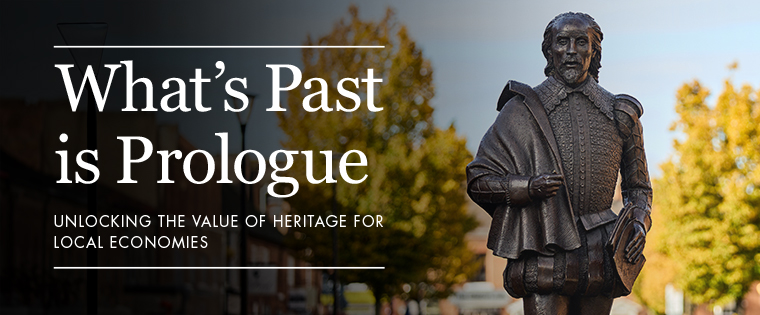
Heritage connects the past, present and future of place. Historic buildings, landscapes, collections, skills, stories and traditions shape local identity while supporting employment, visitor economies, wellbeing and community life.
Yet heritage remains too often confined to conservation or tourism policy, rather than treated as part of the civic and economic infrastructure through which places grow and adapt. What’s Past is Prologue uses the Shakespeare Birthplace Trust and Stratford-upon-Avon as a case study to show how heritage organisations can act as anchor institutions, generating demand, supporting local supply chains and helping communities shape the places in which they live.
Post-pandemic visitor patterns, rising operating costs, fragmented funding and reduced local government capacity have exposed the fragility of existing heritage models. Unlocking heritage’s full value will require long-term stewardship, stronger institutional coordination and clearer place for heritage within national, regional and local growth policy.
Key points
Heritage as civic infrastructure
Heritage includes both tangible assets, such as historic buildings, landscapes, archives and collections, and intangible forms, including skills, traditions, stories and memory. Treating this inheritance as civic infrastructure recognises its continuing role in local identity, social connection, economic activity and the long-term development of place.
Retaining heritage value locally
Heritage generates economic demand through visitors, conservation work, programming, investment and wider spending across place. Its local impact depends on how much of this activity councils and heritage organisations can capture and circulate through local employment, procurement, businesses and skills. Accessible contracts, stronger supplier networks and longer visitor stays can reduce leakage and retain more value within local economies.
Wellbeing, skills and inclusive participation
Heritage can strengthen wellbeing, belonging, education and pride in place, while traditional crafts and conversation skills support both stewardship and the retrofit of historic buildings. These benefits depend on access and representation. Heritage organisations must provide communities with meaningful influence over which histories are recognised, how assets are interpreted and how the benefits of investment are shared.
Heritage-led development and regeneration
Heritage can support town centre renewal, housing, workspaces, community infrastructure and environmental objectives when embedded within economic, cultural and spatial strategies. Adaptive reuse can preserve local character and embodied carbon, but the costs of repair and long-term maintenance often require patient public, private or philanthropic investment.
Governance, stewardship and institutional capacity
Local authorities act as the linchpin of heritage systems through their planning, asset management, convening and place-leadership roles. Strategic authorities can connect heritage to regional growth, transport, skills and investment, while heritage organisations provide specialist knowledge and local legitimacy. Effective stewardship depends on these institutions aligning around shared outcomes and retaining the professional capacity needed to deliver them.
Read more here
Research kindly sponsored by: